
The Blue Jewel: A Guide to the Poecilotheria metallica
The Wow Factor
If there is one spider that sits at the very top of every enthusiast's "dream list," it is the Poecilotheria metallica, famously known as the Gooty Sapphire Ornamental. Originally discovered in the town of Gooty, India, and found in a tiny, protected strip of deciduous forest, this species is a natural masterpiece. It is the only Poecilotheria to boast a dazzling, metallic cobalt-blue coloration covering its entire body, accented by intricate fractal patterns of white and yellow. For the tarantula keeper, the Gooty Sapphire isn't just a pet; it is a living gemstone and the ultimate status symbol of the arboreal hobby.
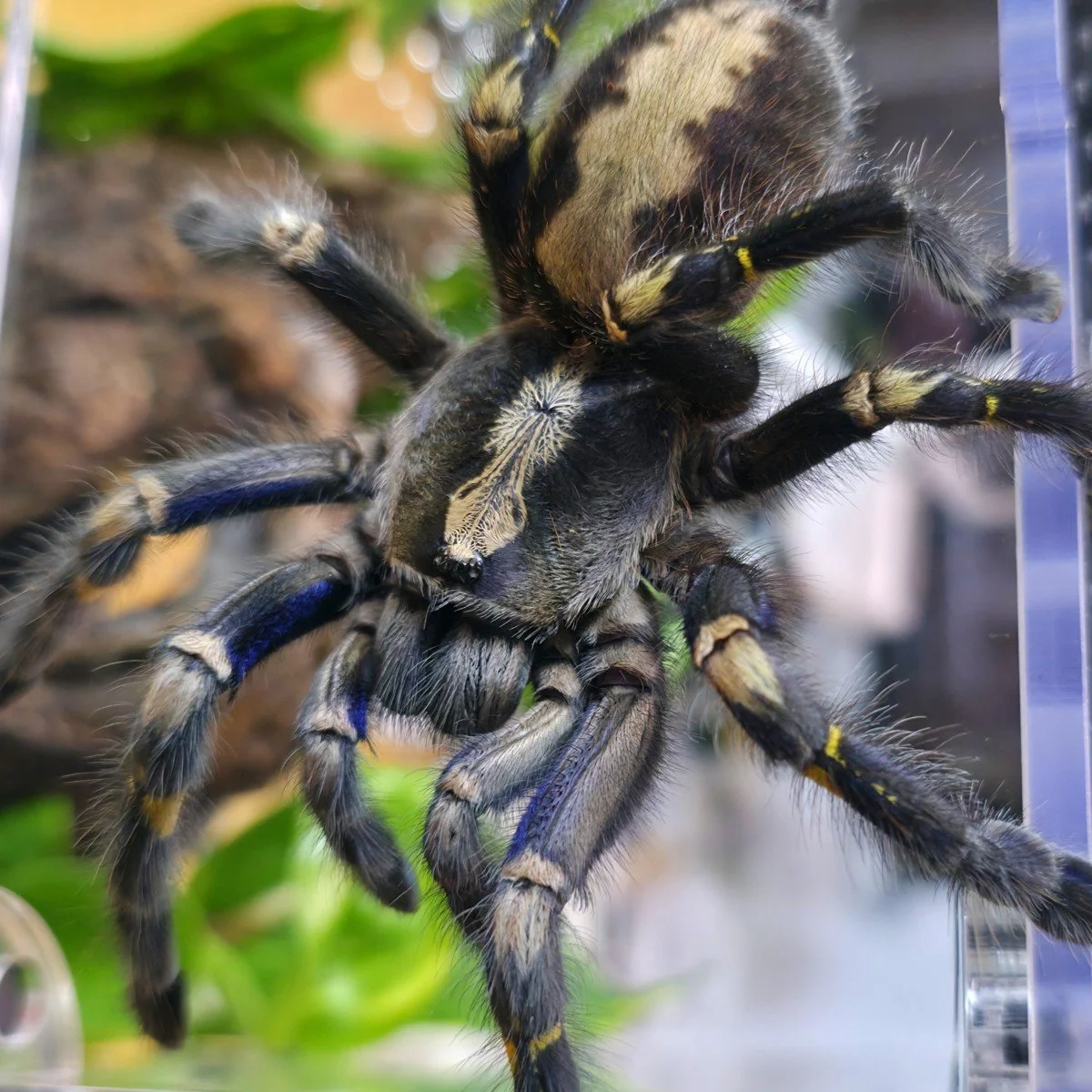
Poecilotheria metallica adult female
Size, Growth, and Longevity
The Gooty Sapphire is a medium to large arboreal tarantula, reaching an adult diagonal leg span of 15cm (6 inches). True to the "Ornamental" name, they are sleek, leggy, and built for life in the canopy. This species enjoys a fast to moderate growth rate, racing through its juvenile stages to reach its signature blue brilliance. Females are the long lived matriarchs of the genus, typically living for 12 to 15 years, while males mature much faster, usually within 3 to 4 years. Watching a greyish spiderling explode into a vibrant blue adult is one of the most rewarding transformations in the hobby.
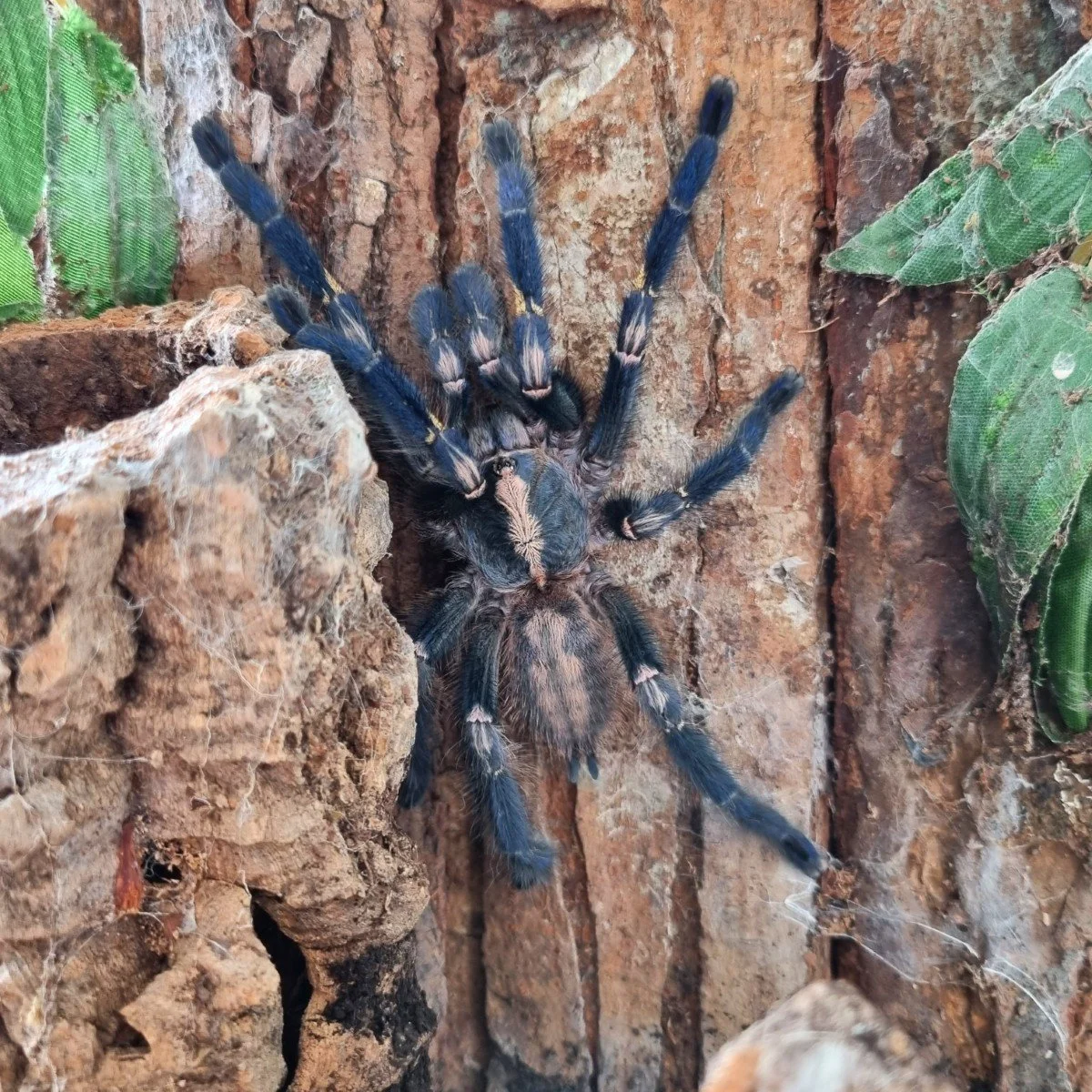
Poecilotheria metallica mature male
Temperament and Suitability
As a member of the Poecilotheria genus, the Gooty Sapphire is strictly for advanced keepers. It is an Old World species, meaning it lacks urticating hairs but compensates with incredible speed and potent venom. While often considered one of the less "aggressive" Poecilotheria, it is still highly skittish and prone to "teleporting" when startled.
This spider requires a keeper with steady nerves and experience handling fast, arboreal Old Worlds. Their bite is medically significant and can cause severe pain, cramping, and systemic effects. In the hobby, the P. metallica is the crown jewel of a collection, requiring a high level of respect and a secure, "hands-off" approach to maintenance.
Simplified Care
The Gooty Sapphire requires a vertical arboreal setup with plenty of height for climbing. In their natural habitat, they live in tree hollows and under loose bark. Provide a tall enclosure with vertical cork bark tubes and silk plants. They are opportunistic webbers and will create a comfortable retreat high up in the enclosure.
To thrive in the UK home, environmental stability is key. They prefer temperatures between 24C and 27C and a humidity level of 70% to 80%. This is best maintained by keeping the substrate slightly damp and providing a vertical water dish. Excellent cross-ventilation is mandatory; without it, the combination of heat and humidity can lead to stagnant air, which is the primary cause of health issues for this species. They have a fantastic feeding response and will expertly snatch crickets, locusts, or roaches from the side of the enclosure.
Conclusion
The Poecilotheria metallica (Gooty Sapphire Ornamental) is the undisputed queen of the tarantula world. Its unreal, electric blue hues and majestic presence make it the centerpiece of any collection. While its Old World speed and potent venom demand an expert level of care, the reward of keeping one of the world's most beautiful spider is an experience like no other. It is the definitive "bucket list" species for the serious arachnid enthusiast.
