
The Purple Earth Tiger: A Guide to the Phormingochilus hatihati
Introduction (The Wow Factor)
If you are looking for a spider that blends gothic elegance with lightning-fast intensity, the Phormingochilus hatihati is an absolute standout. Often called the Hati Hati Purple, this species hails from the tropical forests of Sumatra, Indonesia. It is famous for its sophisticated color palette: a creamy, ornate carapace contrasted by deep, velvety purple-to-maroon legs and a dark abdomen with intricate "Earth Tiger" patterns. For the tarantula keeper, the P. hatihati is a living jewel that offers a striking vertical display, showcasing the raw, untamed beauty of the Asian arboreal lineages.
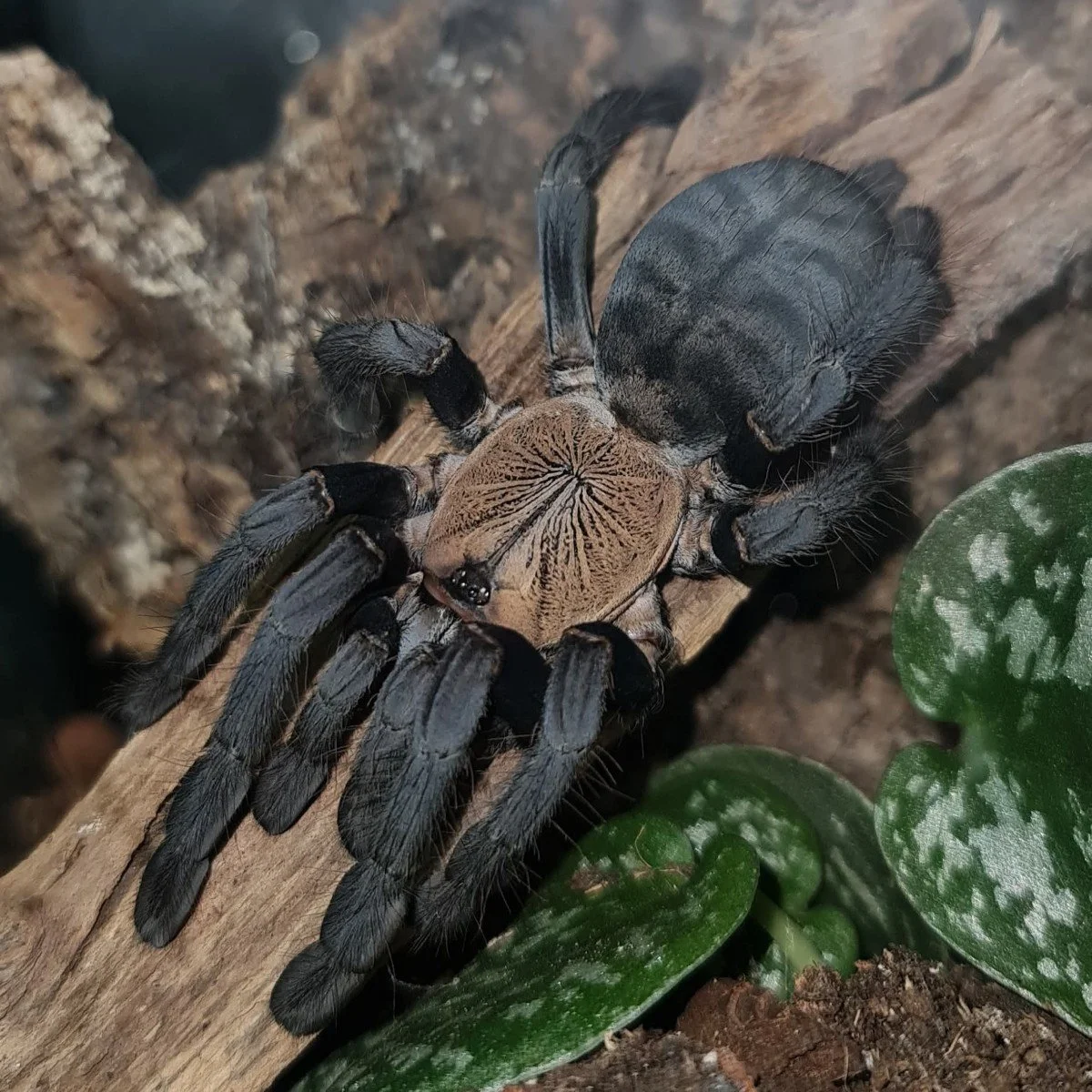
Phormingochilus hatihati adult female
Size, Growth, and Longevity
The Hati Hati Purple is a medium-sized arboreal tarantula, reaching an adult diagonal leg span of approximately 12cm to 15cm (5 to 6 inches). What it lacks in massive bulk, it makes up for in its sleek, leggy silhouette. This species is known for a remarkably fast growth rate; with regular feeding and warm temperatures, a tiny spiderling can transform into a stunningly colorful juvenile in less than a year. As is typical with many Old World arboreals, females are the long-lived stars of the collection, living for 10 to 12 years, while males mature quickly, often within 2 years.
Temperament and Suitability
The name "Hati Hati" is Indonesian for "be careful," and it couldn't be more appropriate for this species. This is a strictly Old World spider, meaning it lacks urticating hairs and relies entirely on its explosive speed and potent venom. The P. hatihati is notoriously defensive and shy; it prefers to retreat into its silk funnel, but if cornered, it will not hesitate to deliver a threat posture or a lightning-fast strike.
Because of its "teleportation-level" speed and high defensiveness, this species is strictly for advanced keepers. It requires a confident hand during rehousing and a deep respect for the capabilities of Asian arboreals. In the UK hobby, it is a prized animal for those who have moved past beginner-friendly species and want to test their skills against a fast, fiery, and beautiful predator.
Enclosure Setup
As an arboreal inhabitant of Indonesian rainforests, the Hati Hati Purple requires a vertical setup. They are unique in that they are often "semi-arboreal" as juveniles, burrowing into the base of trees, but they become true tree-dwellers as they mature. Provide a tall enclosure with plenty of vertical cork bark and silk plants. They are prolific webbers and will create thick, tunnel-like retreats adorned with substrate and debris.
To thrive, they require a warm, humid environment. Aim for temperatures of 24C to 27C and a humidity level of 75% to 80%. This is best achieved by keeping the substrate damp (not swampy) and providing a water dish. Excellent cross-ventilation is mandatory to prevent the growth of mold in these humid conditions. They have a ferocious feeding response and will snatch crickets or roaches right out of the air, making them one of the most exciting species to feed.
Conclusion
The Phormingochilus hatihati (Hati Hati Purple) is a masterclass in arboreal beauty and speed. Its iridescent purple hues and ornate patterns make it a centerpiece of any UK collection, provided the keeper is ready for its spicy temperament. For the advanced enthusiast who can master the tropical requirements of the Indonesian jungle, the "Hati Hati" is a rewarding, high-speed gem that truly lives up to its name.
