
The Socotra Island Blue Baboon: A Guide to the Monocentropus balfouri
Introduction
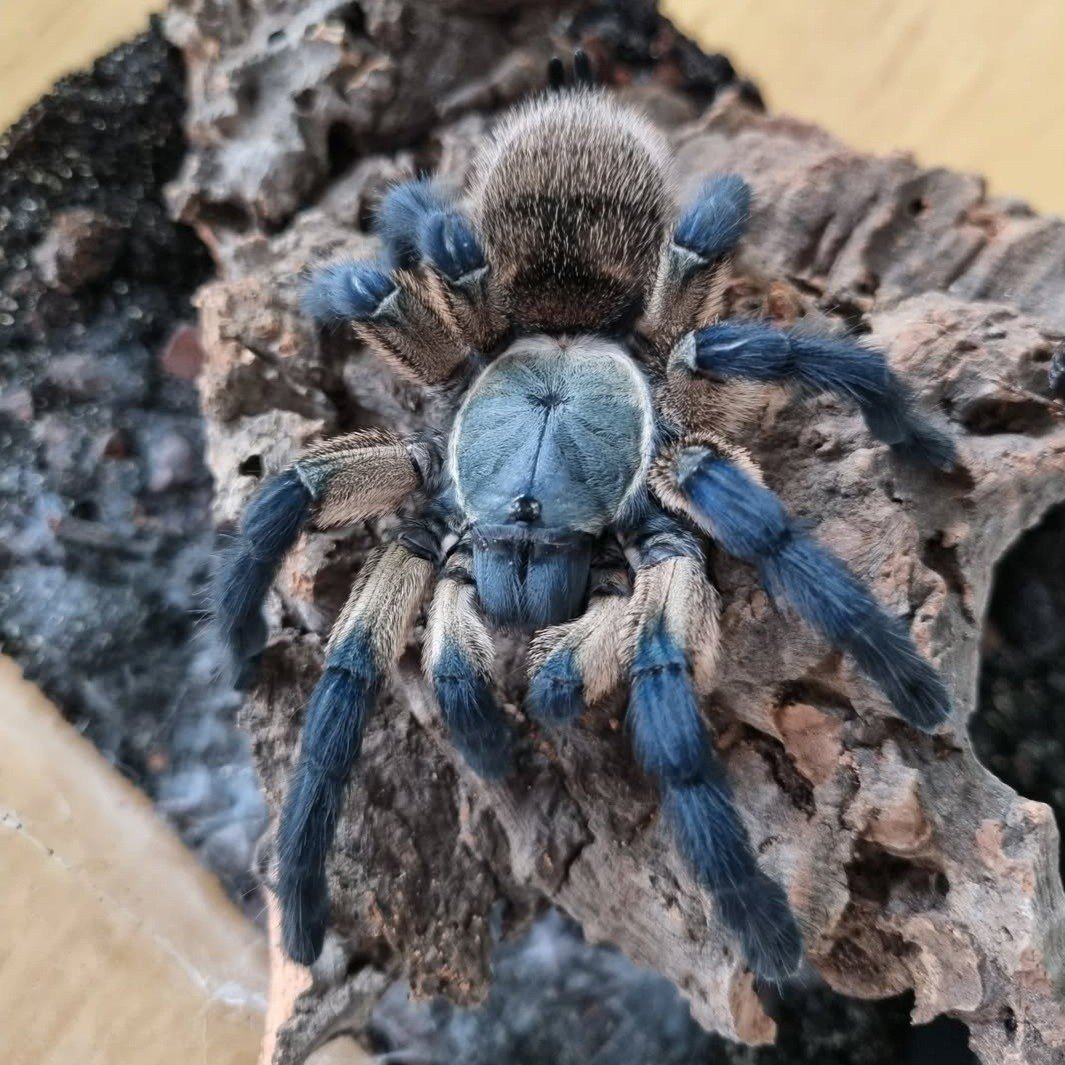
Hailing from the "Galápagos of the Indian Ocean" - Socotra Island, the Monocentropus balfouri, or Socotra Island Blue Baboon, is a tarantula that breaks all the rules. While most spiders are solitary cannibals, the M. balfouri is world-renowned for its extraordinary social behavior, often living peacefully in communal groups. Visually, they are stunning: featuring a creamy tan to beige carapace and legs of a vivid blue. For the tarantula keeper, the "Balfouri" is a unique opportunity to witness complex social interactions and maternal care, all wrapped in a shimmering, sapphire-blue package.
Size, Growth, and Longevity
The Socotra Island Blue Baboon is a medium-sized terrestrial, typically reaching an adult diagonal leg span of 12cm to 14cm (around 5 inches). They possess a moderate growth rate, making the transition from pale spiderlings to blue-legged juveniles a relatively quick and exciting process. Females are quite hardy and can live for 12 to 14 years, while males mature and finish their cycle within 3 to 4 years. In the hobby, they are highly sought after because they pack so much colour and unique behavior into a very manageable, "shelf-friendly" size.
Temperament and Suitability
As an Old World baboon spider, the M. balfouri is recommended for intermediate keepers. While they lack urticating hairs and belong to a defensive lineage, they are surprisingly "laid back" compared to many of their African cousins. They are shy and would much rather retreat into their extensive silk tunnels than stand and fight.
However, they are still lightning fast and possess the potent venom typical of baboon spiders. For the keeper, the real joy is keeping them in a communal setup. Unlike almost any other species, siblings (and sometimes even unrelated individuals) can be raised together in the same enclosure with minimal risk of cannibalism, provided there is plenty of food. This "family" dynamic is a fascinating departure from standard tarantula keeping.
Simplified Care
The Balfouri is a master architect. They are heavy webbers and opportunistic burrowers. To thrive in the captivity, provide a terrestrial enclosure with 10cm to 15cm of dry substrate. They will quickly transform the space into a fortress of thick, white silk tunnels and "dirt curtains."
Environmental care is exceptionally easy: they come from a dry, arid island and prefer a dryer setup. Aim for temperatures between 24C and 28C and keep humidity low (40% to 50%). Simply provide a shallow water dish and occasionally overflow it to create a small moist patch. They are enthusiastic eaters and will often "hunt in packs" when kept communally, taking down crickets, roaches, and locusts with precision.
Conclusion
The Monocentropus balfouri (Socotra Island Blue Baboon) is one of the most rewarding species in the entire hobby. Its striking blue aesthetics combined with its unique social nature make it a must have for any UK keeper looking to experience something truly different. Whether you keep a single "blue beauty" or a thriving family colony, the Balfouri remains a shimmering testament to the wonders of island evolution.
