
Beyond the Buzz: Discovering the Radiant Charm of the Augacephalus breyeri
Introduction
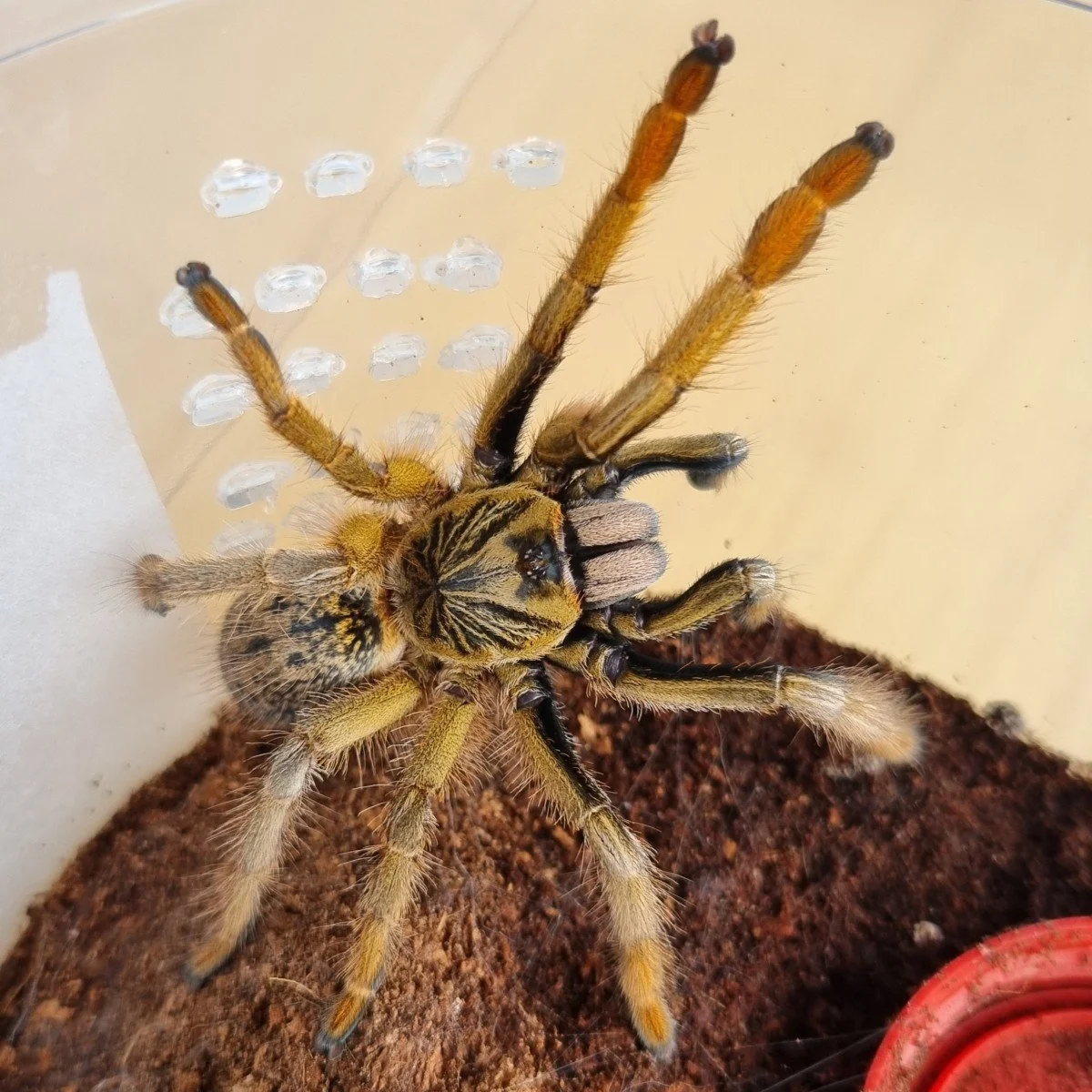
If you’re looking for a tarantula that looks like it was forged from African sunlight, the Augacephalus breyeri - commonly known as the Mozambique Flame Foot or the Lowveld Golden-Brown Baboon is a true masterpiece. Hailing from the thornveld grasslands of South Africa, Mozambique, and Eswatini, this species is a standout in the Harpactirinae subfamily. It features a spectacular radial starburst pattern on its carapace and warm, golden-brown to copper "flame" tones on its legs. For the tarantula keeper, the A. breyeri is a prestigious rarity that offers the classic "baboon" aesthetic with a unique, sun-kissed palette.
Size, Growth, and Longevity
The Mozambique Flame Foot is a robust, medium sized Old World tarantula, typically reaching an adult diagonal leg span of 12cm (around 5 inches). It possesses a medium growth rate, which is quite rewarding as you watch its intricate starburst markings become more defined with every moult. Females are exceptionally hardy and long-lived for the genus, often reaching 12 to 15 years, while males follow the typical shorter life cycle. In the hobby, they are considered a "specialist" species, often harder to find than the common Orange Baboon, making them a pride of any established collection.
Temperament and Suitability
As an Old World baboon spider, the A. breyeri is strictly for intermediate to advanced keepers. While it is often described as slightly more "laid back" and reclusive than the fiery Pterinochilus murinus (OBT), it remains a lightning-fast predator with potentially potent venom. It lacks urticating hairs and relies on speed and its "statue to teleport" movement style for defense.
For the keeper, this spider is a fantastic "next step" into the world of African baboons. It is primarily fossorial, meaning it spends much of its time in deep, silk-lined burrows. While it is generally skittish and prefers to retreat, it will not hesitate to give a threat posture if pushed. It is a "hands-off" species that rewards the keeper with its stunning appearance during late-night feedings.
Care
The Mozambique Flame Foot is a dedicated burrower that inhabits arid grasslands. To thrive in the captivity, they require a terrestrial/fossorial setup with a heavy emphasis on substrate depth. Provide at least 15cm of dry to semi moist substrate (a mix of topsoil and sand is ideal) to allow them to construct their 20cm deep vertical burrows.
Environmental needs are straightforward and suit the UK climate well. They prefer temperatures between 24C and 26C and moderate humidity levels of 50% to 60%. Keep the substrate mostly dry, but always provide a shallow water dish and occasionally overflow it to provide a small moisture gradient at the bottom of the burrow. They are prolific webbers around their burrow entrance and are enthusiastic hunters, taking down crickets and roaches with typical baboon-spider efficiency.
Conclusion
The Augacephalus breyeri (Lowveld Golden-Brown Baboon) is a golden treasure of the South African veld. Its radiant starburst patterns and robust nature make it one of the most visually appealing Old World species available. While its speed and defensive lineage require an experienced hand, the reward of keeping such a rare and glowing "Flame Foot" is a highlight for any UK keeper. It is a stoic, beautiful, and fascinating representative of Africa's diverse tarantula fauna.
Product Links
Augacephalus breyeri (Lowveld Golden-Brown Baboon)
