
The OBT: A Guide to the Pterinochilus murinus (Red Colour Form)
Introduction
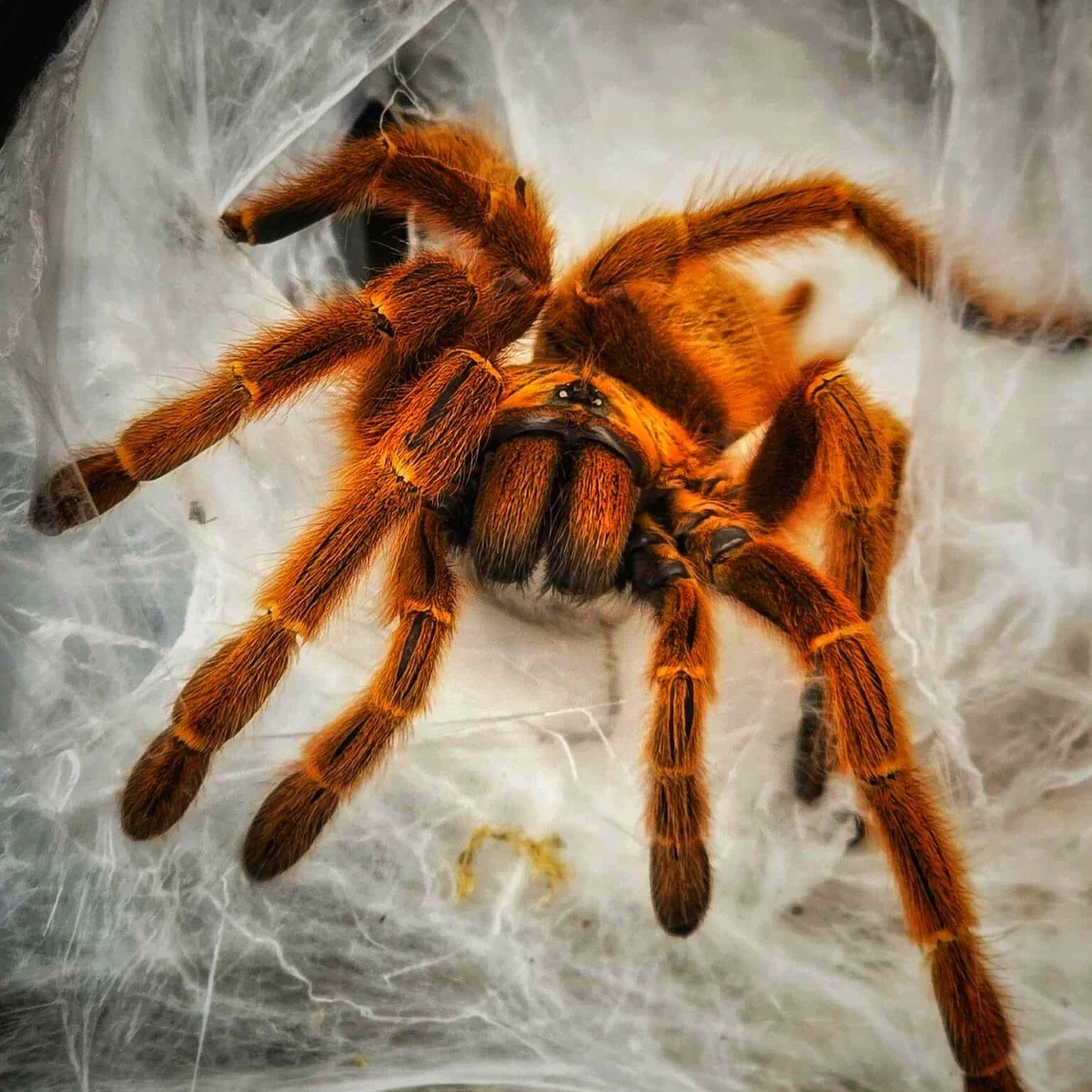
In the tarantula hobby, no spider has a reputation quite like the Pterinochilus murinus. While it has many names, including the Usambara Starburst or the Mombasa Golden Starburst, it is most affectionately (and warily) known by its acronym: the OBT. While the hobby joke suggests it stands for "Orange Bitey Thing," the Red Colour Form (RCF) is the stunning, high-contrast variant that most keepers crave. Draped in a brilliant, almost neon burnt orange to pumpkin red, this African baboon spider is a living lightning bolt. For the keeper, the OBT RCF is a rite of passage, a beautiful, high-speed, and incredibly defensive masterpiece of nature.
Size, Growth, and Longevity
The Pterinochilus murinus RCF is a medium-sized Old World tarantula, reaching an adult diagonal leg span of 12cm to 14cm. What it lacks in massive size, it more than makes up for in presence. This species is famous for its explosive growth rate; it is a voracious eater that can reach maturity in a fraction of the time it takes other genera. Females are remarkably hardy and can live for 12 to 15 years, while males mature quickly, often in under 2 years. They are prized for their "indestructible" nature, thriving in conditions that would challenge more sensitive species.
Temperament and Suitability
The OBT RCF is strictly for advanced keepers. It is the poster child for Old World defensiveness. Lacking urticating hairs, it relies on its blinding speed, legendary threat posture, and potent venom. The OBT is not shy; it is a "stand your ground" spider that will readily slap the ground or lunge if it feels its territory is being invaded.
For the tarantula keeper, this spider represents a significant jump in responsibility. It is a "teleporter" that can move faster than the human eye can track. However, their sheer confidence and bright orange coloration make them one of the most entertaining display animals in the hobby, provided you maintain a strict "no-touch" policy.
Enclosure Setup
The OBT is perhaps the most adaptable architect in the spider world. It can be kept as terrestrial, fossorial, or even semi-arboreal. To thrive, provide a secure enclosure with 10cm of dry substrate and plenty of anchor points like cork bark and fake plants. They are heavy webbers and will quickly turn their entire habitat into a thick, white "blanket fort" of silk.
Environmental care is remarkably simple: they are extremely drought-tolerant. They prefer a dry setup with temperatures between 24C and 28C. Humidity should be kept low (40% to 50%), and a shallow water dish is all they need for hydration. They are legendary hunters, attacking prey with a ferocity that few other species can match. Their hardiness makes them one of the easiest spiders to keep alive, even if they are one of the most difficult to manage during rehousing!
Conclusion
The Pterinochilus murinus (Red Colour Form) is a vibrant, high-octane icon of the arachnid world. Its brilliant orange-red hues and fierce personality make it a must-have for any tarantula keeper looking to test their skills with a true Old World classic. It is a beautiful, bold, and brilliantly intense spider that demands, and deserves, every bit of its fearsome reputation.
Product Links
Pterinochilus murinus (Red Colour Form / RCF)
