
Davus sp. “Panama” - The Panama Lava Tarantula
Davus sp. "Panama", better known as the Panama Lava Tarantula, is one of the most eye-catching dwarf tarantulas in the hobby. Jet-black legs and carapace set against glowing red-orange femurs and a fiery patterned abdomen give this species a look that really does resemble molten lava - and all of it packed into a spider that stays small enough to house in a compact enclosure.
It is a New World terrestrial species from Panama, and while it is still considered uncommon in the hobby, it has earned a strong following among keepers who want real colour without the space demands (or the attitude) of larger species.
It is worth noting that this spider is still an undescribed species, which is why it carries the "sp." label. For some time it circulated in the hobby as Theraphosinae sp. "Panama" before being placed in the genus Davus, and you may still see both names used for the same animal.
What exactly is Davus sp. "Panama"?
The genus Davus was described by O. Pickard-Cambridge in 1892 and contains a small number of Central American and Mexican tarantulas, including Davus fasciatus and Davus pentaloris. They are often called "tiger rump" tarantulas thanks to the red-orange banding on the abdomen that runs through the genus.
Davus sp. "Panama" sits firmly in that family resemblance, but it is noticeably smaller than its described relatives and far more intensely coloured. It has not yet been formally described, so everything we know about it comes from keepers and breeders rather than scientific literature.
As with any undescribed species, locality and lineage matter. We always recommend buying from a source that can tell you where their animals came from, and keeping bloodlines pure if you plan to breed.
Because it has only been in the hobby for a relatively short time, availability can be patchy. When captive-bred slings do appear, they tend to sell quickly.
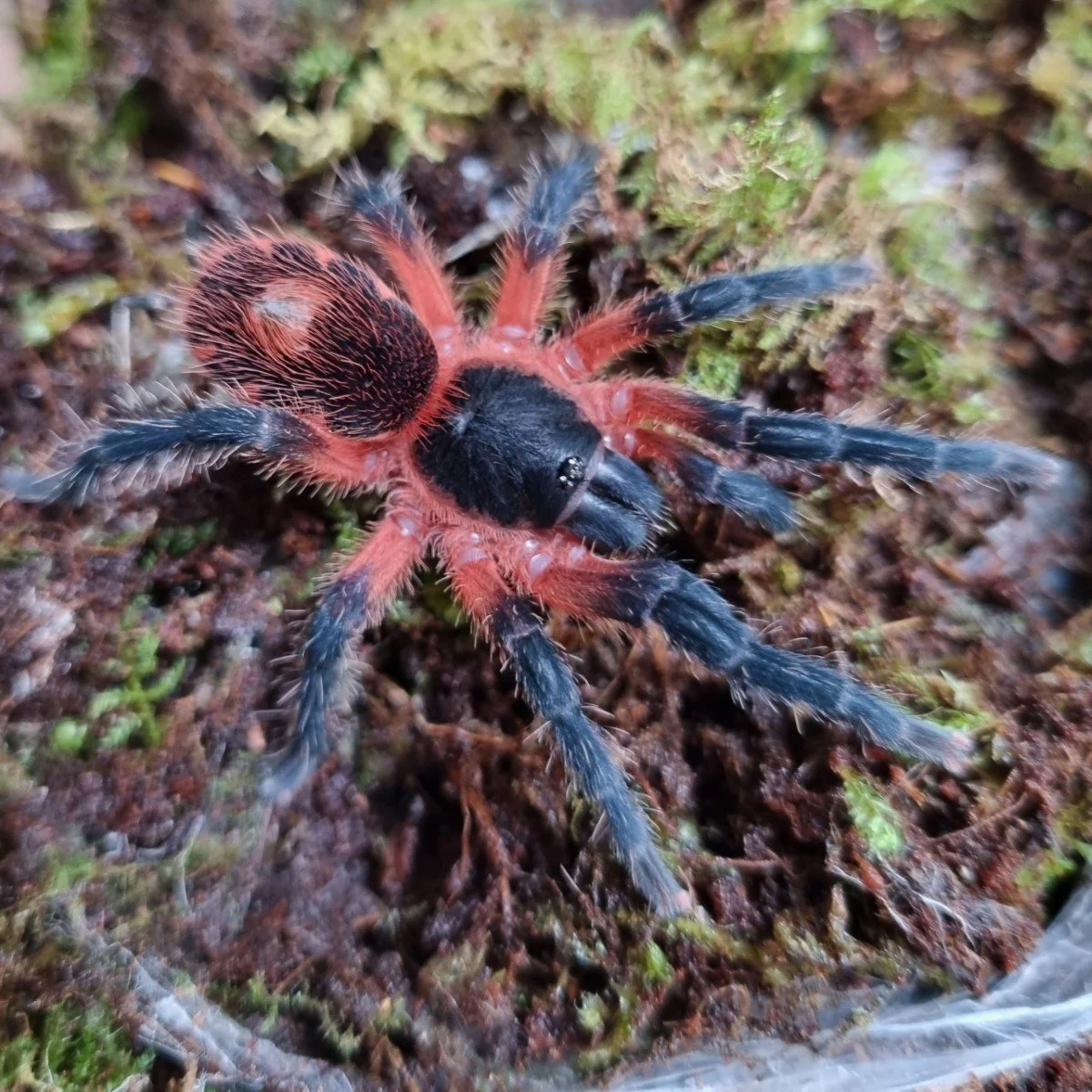
The colouration is what makes the Panama Lava Tarantula stand out.
The legs are black from the knees down, and the carapace is black too. Against this, the femurs glow a rich red-orange, giving the impression of embers burning beneath dark rock.
The abdomen continues the theme: a black base broken up by a bright red-orange semicircle and tiger-striped banding down the sides - the classic Davus pattern, but turned up to full intensity.
Colour develops as the spider grows. Tiny slings are fairly plain, and the lava look becomes more pronounced with each moult, which makes raising one from a sling particularly rewarding.
This is a dwarf species. Females typically reach around 8-10 cm (3-4") diagonal leg span, and males mature smaller and slimmer. As with most tarantulas, the difference in lifespan is significant: females can live well over a decade with good care, while males usually live only a few years.
Where would you find Davus sp. "Panama"?
Davus sp. "Panama" is a terrestrial species, and as the name suggests it is found in Panama.
In captivity it is an opportunistic burrower. Given enough substrate, it will dig and line tunnels and retreats with silk, and many individuals spend a good part of their time tucked away inside them.
That said, it is not an especially shy spider. Many keepers find that once settled, their Lava Tarantula will sit at the entrance of its burrow or wander the enclosure, especially around feeding time.
Temperament is generally calm for a small New World terrestrial, although like most dwarf species they can be quick when disturbed. As a member of Theraphosinae it may also flick urticating hairs if stressed, so it is best treated as a display animal rather than one to handle.
Davus sp. "Panama" - the Panama Lava Tarantula
Davus sp. "Panama" husbandry
One of the best things about this species is how forgiving it is. The Panama Lava Tarantula is hardy, a willing feeder and tolerant of small husbandry mistakes, which makes it a great choice for keepers moving on from their first tarantula as well as for experienced collectors.
Slings are very small, so they need a correspondingly small enclosure. This makes it easy for them to find food and helps you keep an eye on them. Upgrade gradually as they grow rather than jumping straight to a large enclosure.
For adults, a compact terrestrial enclosure is ideal. As a rough guide, aim for floor space of around two to three times the spider's diagonal leg span, with more width than height to reduce the risk of falls.
Provide a good depth of substrate so it can burrow: a couple of centimetres for slings, increasing to 10 cm or more for adults. A coco fibre or topsoil-based mix that holds a burrow well works nicely. Add a piece of cork bark as a starter hide and it will usually take things from there.
Humidity and water
This species does best with moderate humidity. We keep part of the substrate lightly moist - often by overflowing the water dish or dampening one corner - while allowing the rest to stay drier, giving the spider a gradient to choose from.
Provide a shallow water dish once the spider is large enough, and make sure the enclosure has good ventilation so it never becomes stuffy or stagnant.
Temperature
Normal room temperatures in the region of 22-26°C suit them well. Avoid long periods below about 18°C or above 29°C.
Feeding
Davus sp. "Panama" is a keen eater. Small slings can be offered pre-killed prey or tiny live food such as fruit flies or small cricket nymphs, while larger spiders will take crickets, roaches and other appropriately sized feeders.
Feed prey no larger than the spider's abdomen, remove anything uneaten after 24 hours, and wait around a week after a moult before offering food again.
Is the Panama Lava Tarantula right for you?
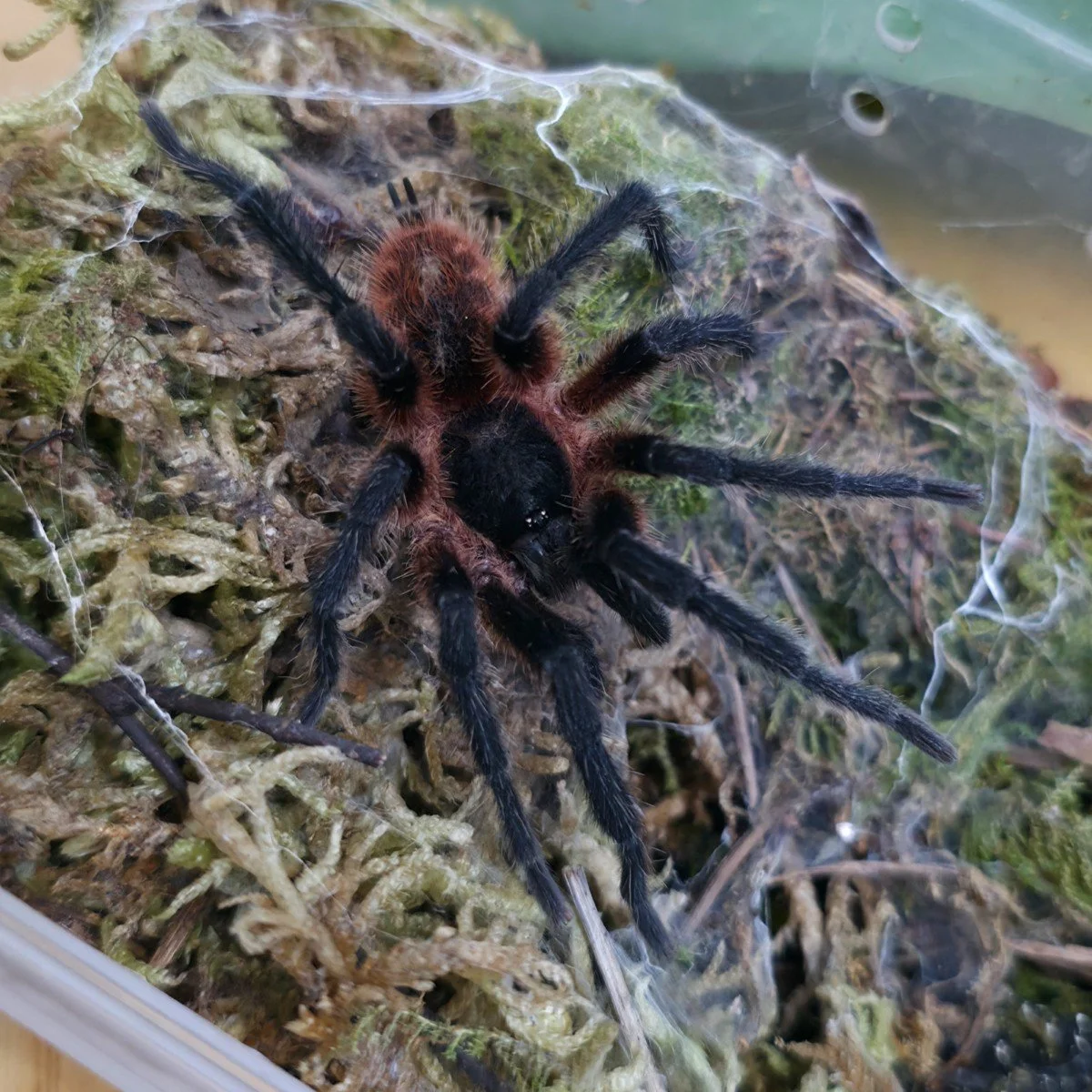
Davus sp. "Panama" offers a rare combination: genuinely striking colour, a compact adult size, hardy nature and a healthy appetite.
It does not need a large enclosure, it is visible more often than many burrowing species, and it is forgiving enough for keepers who are still building their experience.
The main things to bear in mind are its speed as a small spider, its urticating hairs, and the fact that slings start out very tiny and need appropriately small food and housing.
If you want a dwarf tarantula that punches well above its size in appearance, the Panama Lava Tarantula is one of the best choices in the hobby - and one that looks better and better with every moult.
Davus sp. 'Panama' (Lava Tarantula) is a striking New World dwarf species native to Panama. Known for its fiery red and black pattern, it’s hardy and beginner-friendly. A must-have for collectors. Captive-bred specimens available now.
