
Typhochlaena cf. paschoali - One of the Rarest Jewels in the Tarantula Hobby
Typhochlaena cf. paschoali is without doubt one of the rarest and most sought-after Typhochlaena currently found in the tarantula hobby. With spectacular adult female colouration, tiny eggsacs and very limited availability, this is a species that even experienced collectors can struggle to obtain.
The genus Typhochlaena consists of small arboreal Brazilian tarantulas famous for their unusual trapdoor-building behaviour. Rather than constructing a retreat at ground level, these spiders create remarkably well-camouflaged trapdoors on trees and hide beneath them. This arboreal trapdoor lifestyle is one of the characteristics that makes the genus so fascinating.
It is important to note that the spiders circulating in the hobby under the name Typhochlaena cf. paschoali should not automatically be considered identical to the scientifically described Typhochlaena paschoali. The “cf.” - short for confer - essentially indicates that the animal resembles T. paschoali, but its exact identification remains uncertain. The formally described T. paschoali was described from material originating from Camacan in the Brazilian state of Bahia.
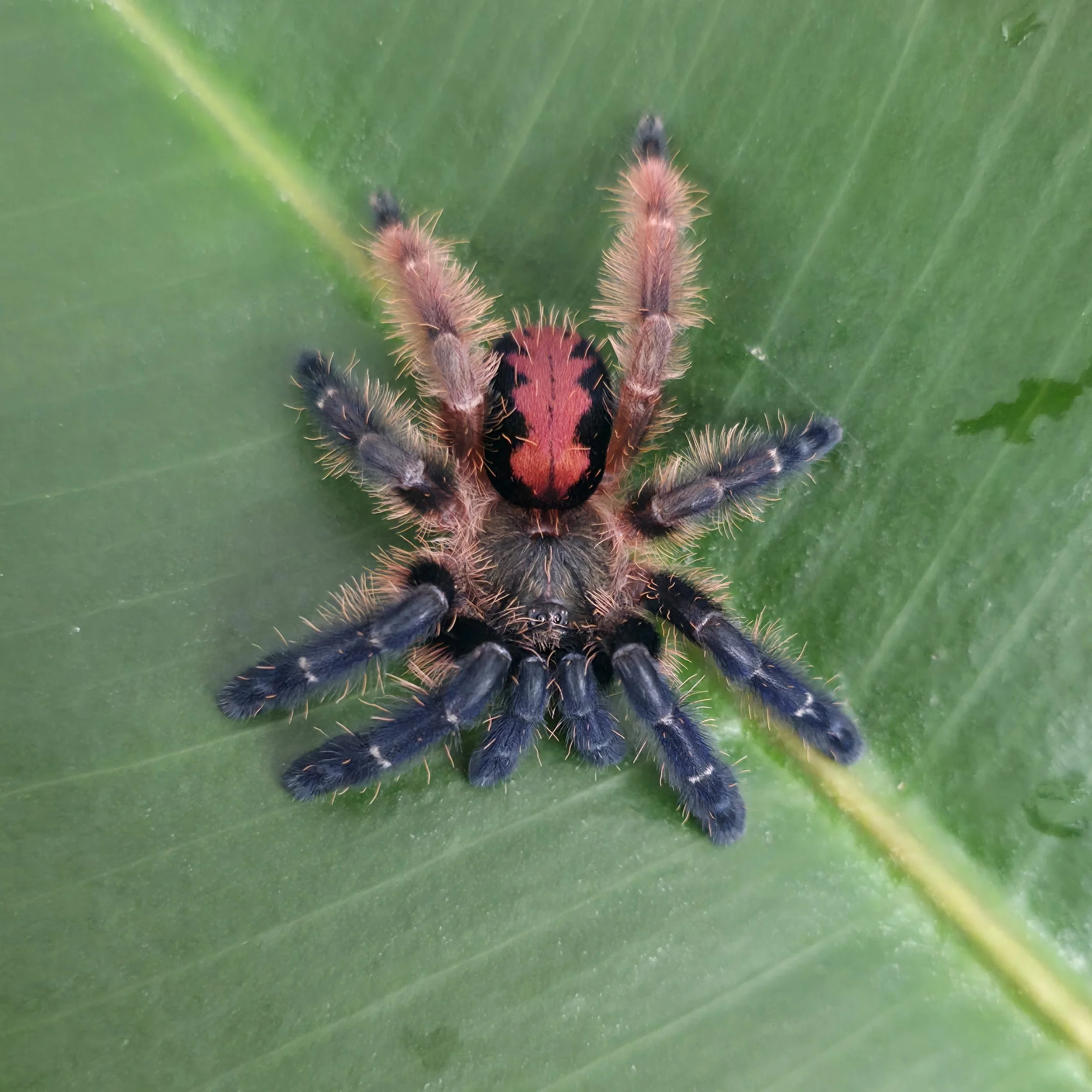
Why is Typhochlaena cf. paschoali so rare?
One of the biggest challenges with this species is reproduction. From our experience and information circulating among breeders, eggsacs can contain only around 5–12 eggs. When you compare this with many other tarantula species capable of producing dozens or even hundreds of offspring from a single sac, it becomes easy to understand why T. cf. paschoali remains so scarce.
Even a completely successful breeding may therefore produce only a handful of spiderlings.
Demand is extremely high while the number of captive-bred spiderlings produced each year is incredibly small. As a result, T. cf. paschoali can command exceptionally high prices and is arguably one of the most expensive tarantulas currently established in the hobby.
Simply putting together a breeding pair can be extremely difficult. Finding one specimen is challenging enough; finding healthy, unrelated males and females at the correct stage for breeding can be another matter entirely.
This makes every successful captive breeding particularly rewarding.
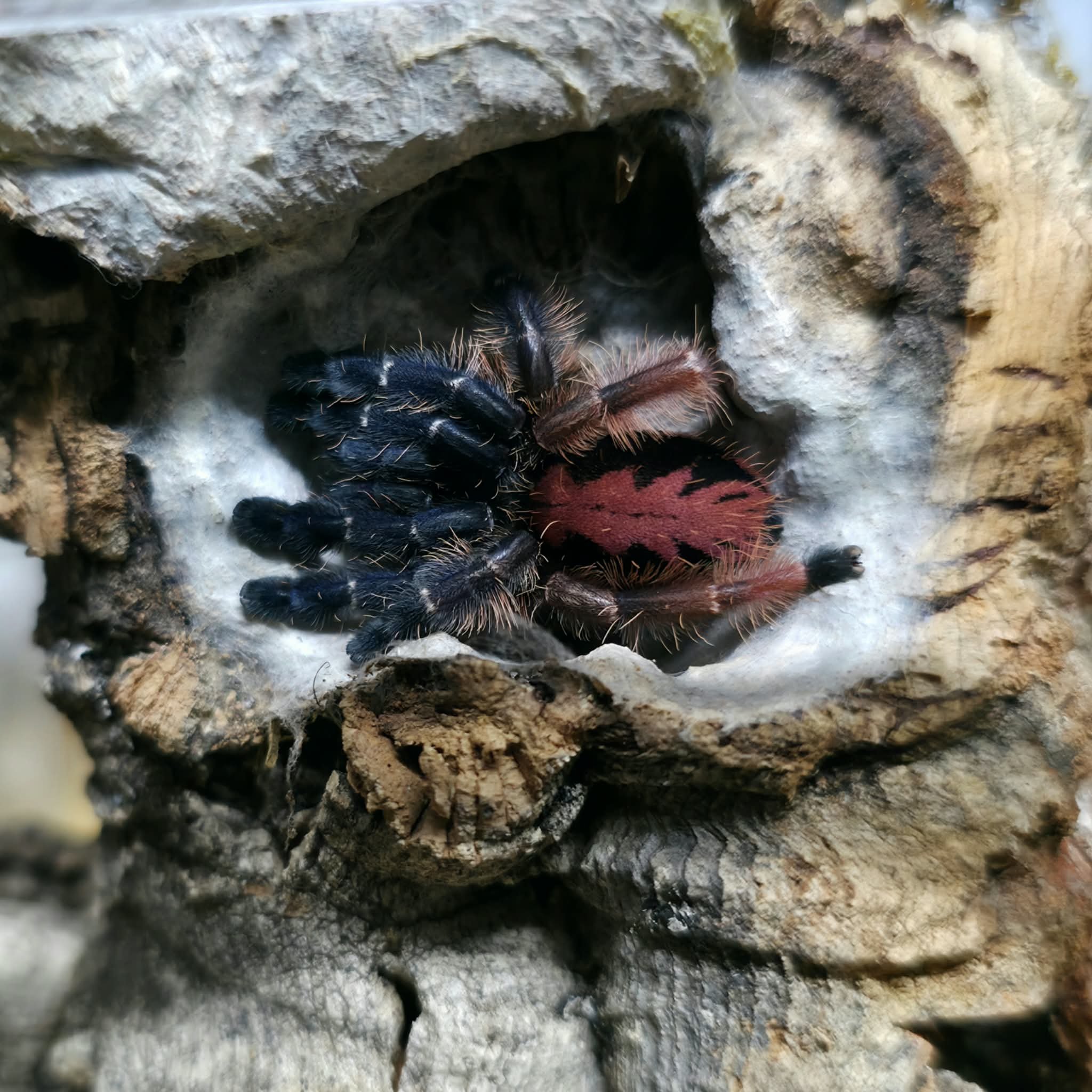
Adult Female Typhochlaena cf. paschoali
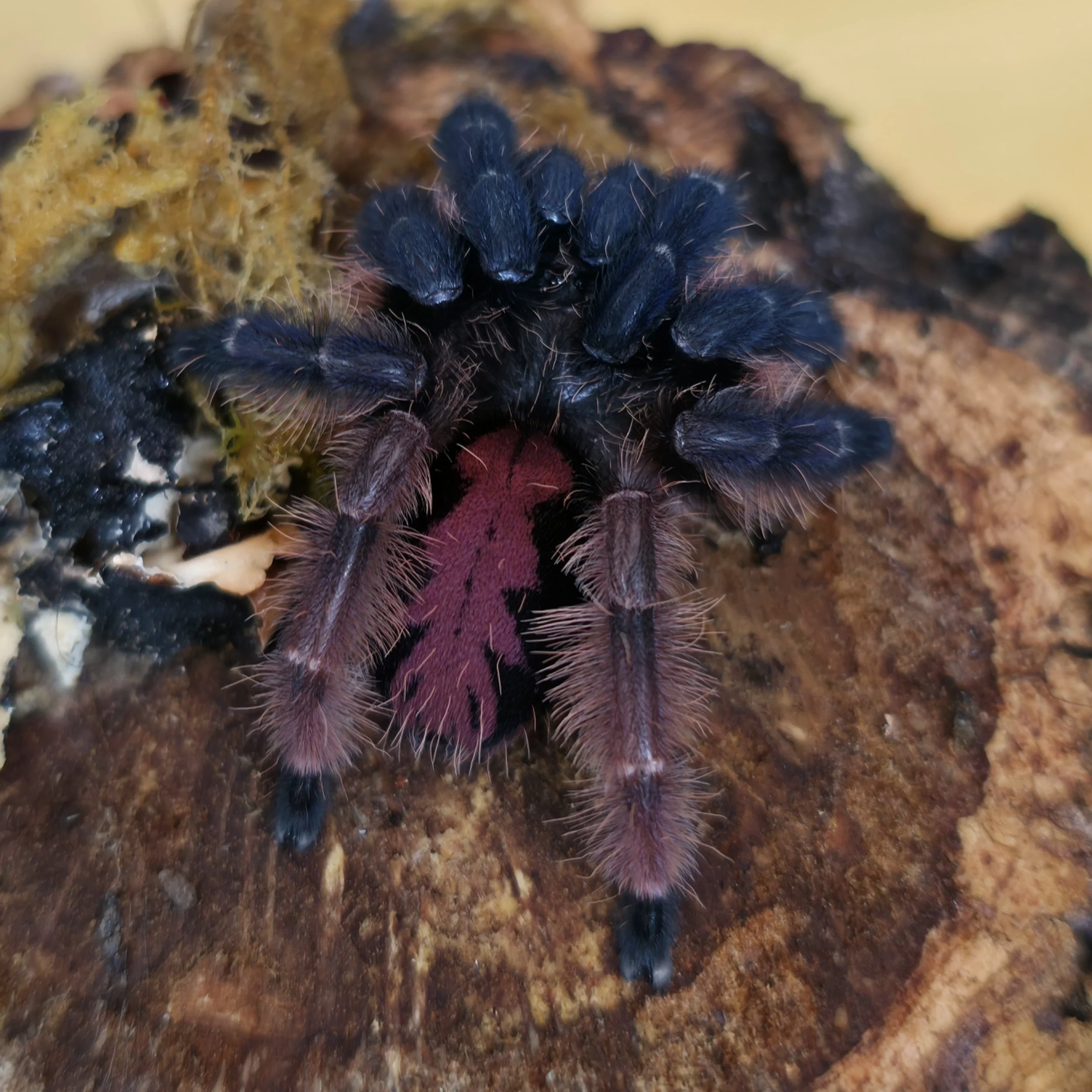
The colouration of an adult female is what really makes Typhochlaena cf. paschoali stand out.
Against an almost black abdomen sits a striking, vibrant red ornament. The rear two pairs of legs display beautiful red colouration, while the front legs are much darker, with deep blue tones accompanied by contrasting reddish setae.
The overall appearance is extraordinary, particularly when viewed under good lighting.
At first glance the species can appear quite similar to Typhochlaena amma. One of the noticeable differences between the hobby forms is the appearance and distribution of the setae on the front legs.
Sexual dimorphism is also particularly dramatic. Mature males become predominantly brown and look almost nothing like the beautifully coloured adult females.
Where would you find the T. cf. paschoali?
Like other members of Typhochlaena, these spiders are arboreal trapdoor builders.
Given suitable cork bark or another appropriate vertical surface, they construct a concealed retreat and trapdoor. Watching one of these tiny spiders disappear behind a perfectly camouflaged door is one of the most interesting behaviours you can observe in the tarantula hobby.
Interestingly, females can sometimes be seen leaving their trapdoor and actively hunting prey.
We have observed them feeding extremely well on brown crickets, and seeing a female venture outside her retreat to pursue prey is particularly fascinating, as some other Typhochlaena species can be much more reluctant to expose themselves.
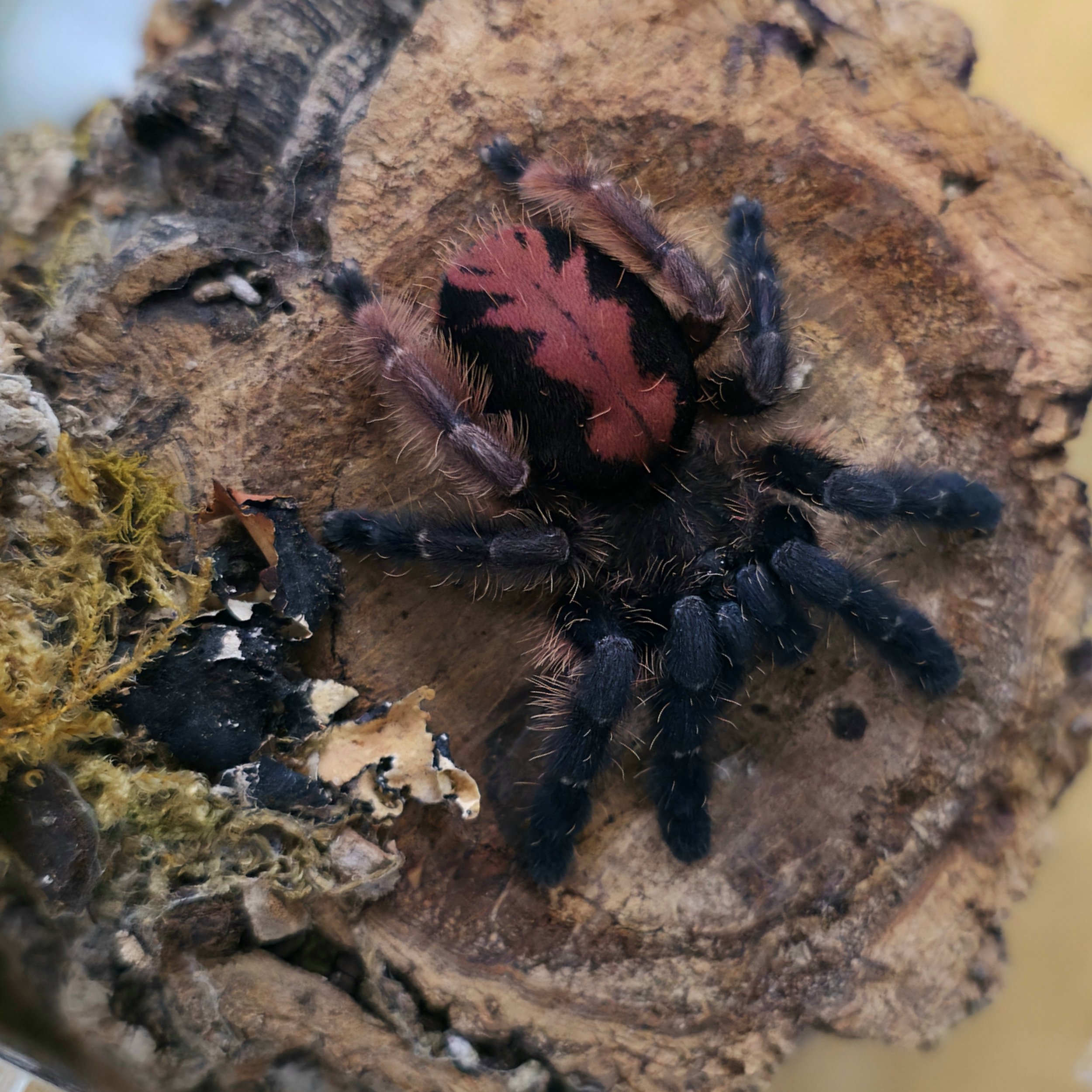
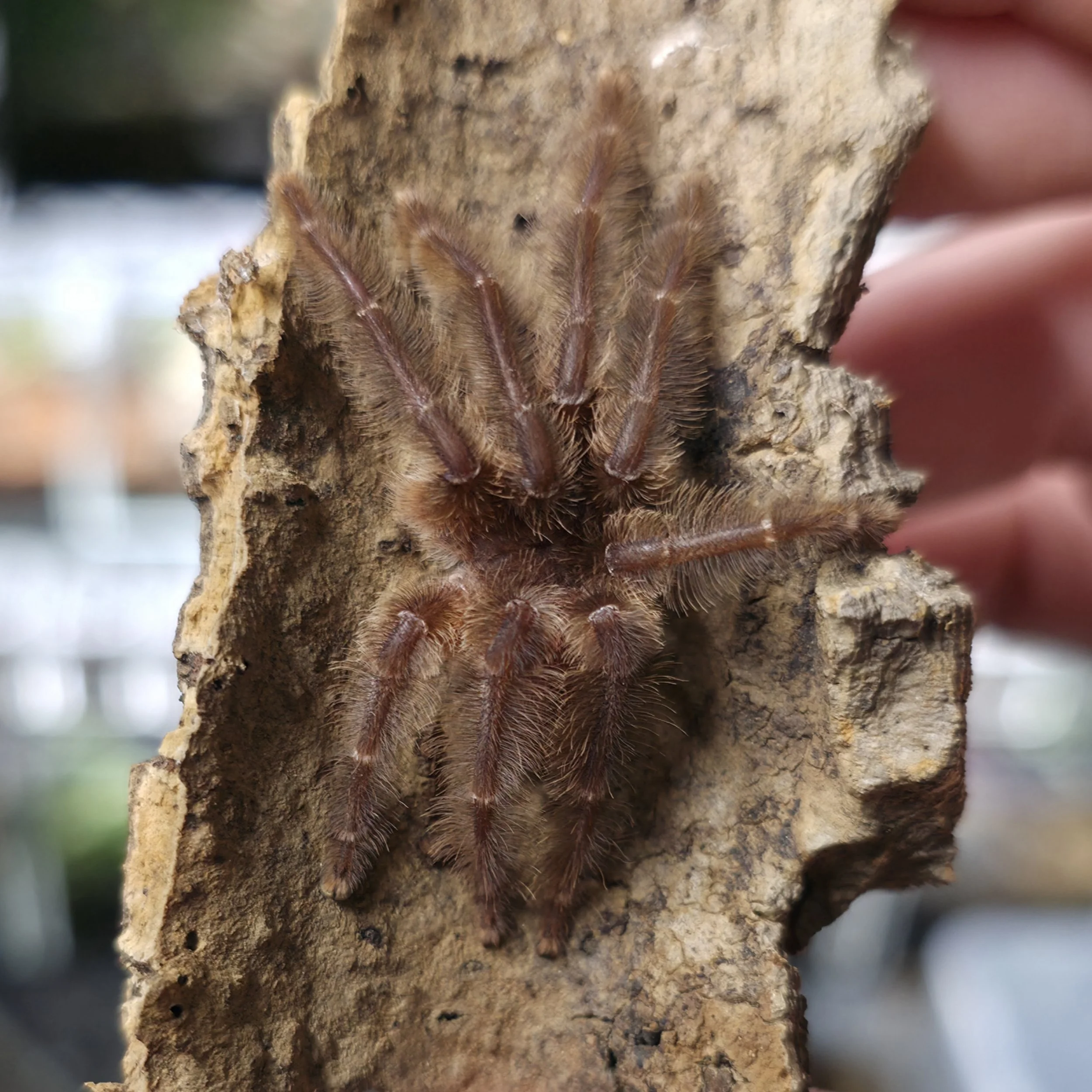
Adult Female and Mature Male Typhochlaena cf. paschoali
Typhochlaena cf. paschoali husbandry
Despite their rarity and price, we have found T. cf. paschoali spiderlings surprisingly straightforward compared with some other members of the genus.
In our experience they are considerably less fragile than species such as Typhochlaena seladonia or Typhochlaena chapadensis.
Another advantage is their size. Spiderlings hatch relatively large for the genus, at approximately 1 cm diagonal leg span (DLS).
For very young spiderlings, we have had excellent results keeping them on paper towel rather than conventional substrate.
The most important consideration is moisture: the enclosure itself should remain extremely dry.
We provide a small water source using a water dish with wet cotton, from which the spiderlings drink readily. Once a week, the sides of the enclosure can be misted very lightly, but we try to avoid getting the paper towel itself wet.
Good ventilation is extremely important.
Temperature
Our spiderlings have performed well with relatively warm daytime temperatures of approximately 27–30°C, with temperatures allowed to fall to around 22°C overnight.
Rather than trying to maintain one constant temperature throughout the entire 24-hour period, this provides a noticeable day/night temperature cycle.
Feeding
Young T. cf. paschoali are excellent feeders. We have had very good results offering pre-killed brown crickets to small spiderlings. Despite their tiny size, they readily scavenge from appropriately sized prey.
During the first two instars, spiderlings can also be temporarily kept together. At this early stage we have observed them feeding alongside one another and even sharing the same prey item.
As they develop, however, we prefer to separate them into individual enclosures rather than relying on communal housing long-term.
Dry does not mean no access to water
One of the most important distinctions when keeping this species is the difference between maintaining a dry enclosure and dehydrating the spider.
The enclosure can remain essentially bone dry while the animal still has reliable access to drinking water.
Our approach with small spiderlings is therefore simple: dry paper towel, excellent ventilation, access to water through wet cotton in a small dish, and a very light mist of the enclosure walls approximately once per week.
The goal is not to increase substrate humidity. It is simply to provide occasional droplets while maintaining the dry conditions in which we have found the spiderlings to thrive.
A species for dedicated Typhochlaena keepers
Typhochlaena cf. paschoali combines almost everything that makes the genus special: tiny adult size, arboreal trapdoor behaviour, extraordinary colouration, rarity and fascinating breeding biology.
But its tiny eggsacs change the economics and availability of the species completely.
When an eggsac may contain only 5-12 eggs, every successful spiderling matters. Even after successfully pairing a female, producing a good sac does not suddenly create large numbers of animals for the hobby. This helps explain why captive-bred specimens remain so difficult to obtain and why prices can be exceptionally high.
For us, however, that rarity is only part of the appeal.
Successfully establishing and breeding species such as Typhochlaena cf. paschoali in captivity means building sustainable captive populations of tarantulas that very few keepers have the opportunity to work with.
And when a tiny trapdoor finally opens and one of those brilliantly coloured females comes out to hunt, it becomes very easy to understand why this species has become such a sought-after jewel of the tarantula hobby.
If you would like to add one of these beautiful spiders to your collection, we have a handful of slings available below:
A fantastic opportunity to add a rare and highly sought-after Typhochlaena cf. paschoali to your collection. These tiny slings are approximately 1 cm and make an excellent choice for keepers interested in unusual arboreal tarantulas.
Typhochlaena are a fascinating genus of small, secretive tarantulas from Brazil, known for their distinctive trapdoor-style retreats and reclusive behaviour. Their compact size and unique lifestyle make them particularly interesting to experienced tarantula keepers.
