
The Living Palette of Xenesthis: Exploring the Colouration Differences Across the Genus
Introduction
Few tarantulas captivate enthusiasts quite like Xenesthis. Native to Colombia and Venezuela, these massive New World spiders combine impressive size with some of the most striking colouration found in the tarantula hobby. While many species share a similar body structure, each possesses unique combinations of iridescent violets, blues, pinks, creams, and velvety blacks that make identification both fascinating and challenging.
As more locality forms and undescribed species enter the hobby, the colour diversity within Xenesthis continues to expand. Here is a closer look at the visual characteristics that distinguish some of the most beautiful and sought after spiders.
Continue reading to learn more about the colouration differences across the Xenesthis genus.
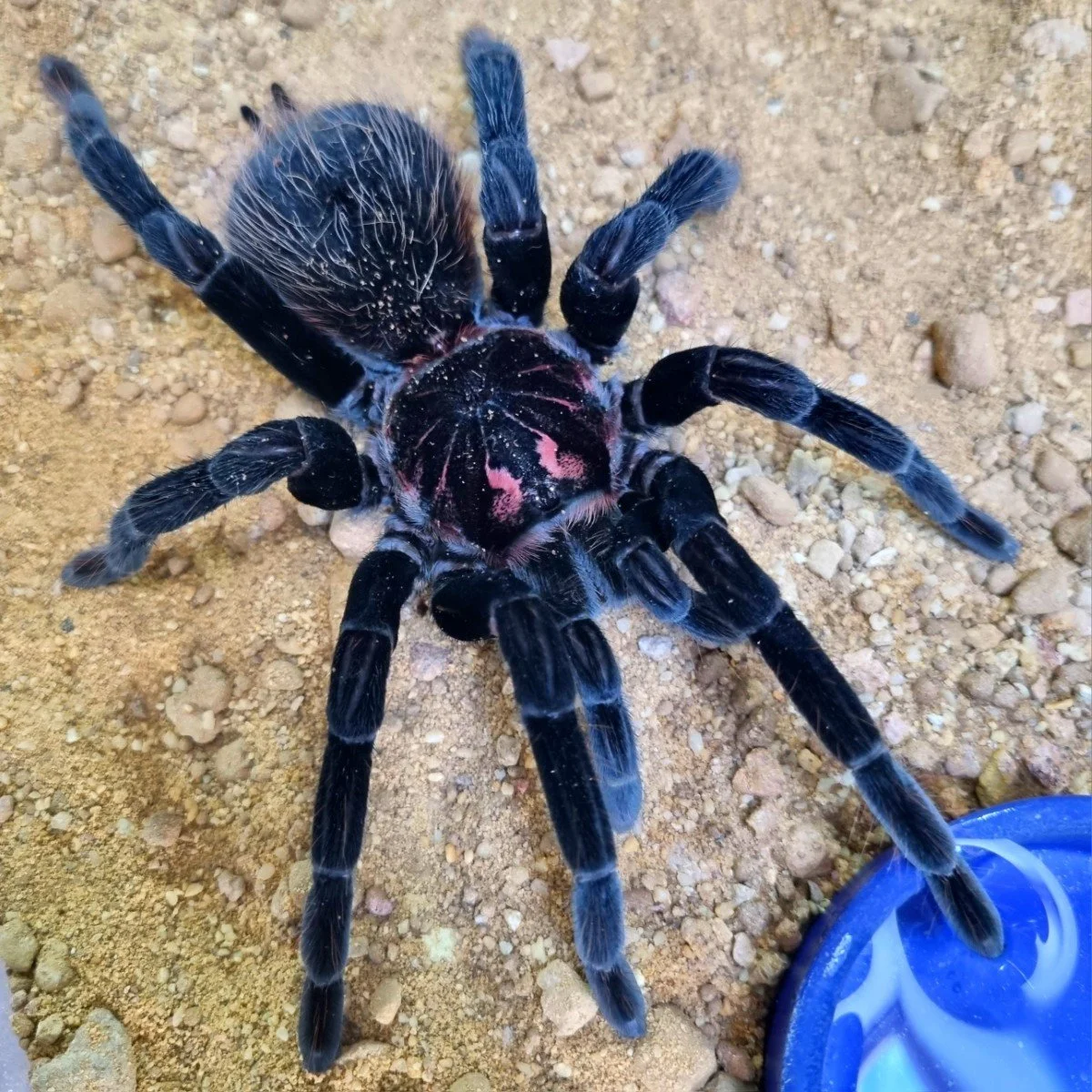
Xenesthis Immanis - Adult Female
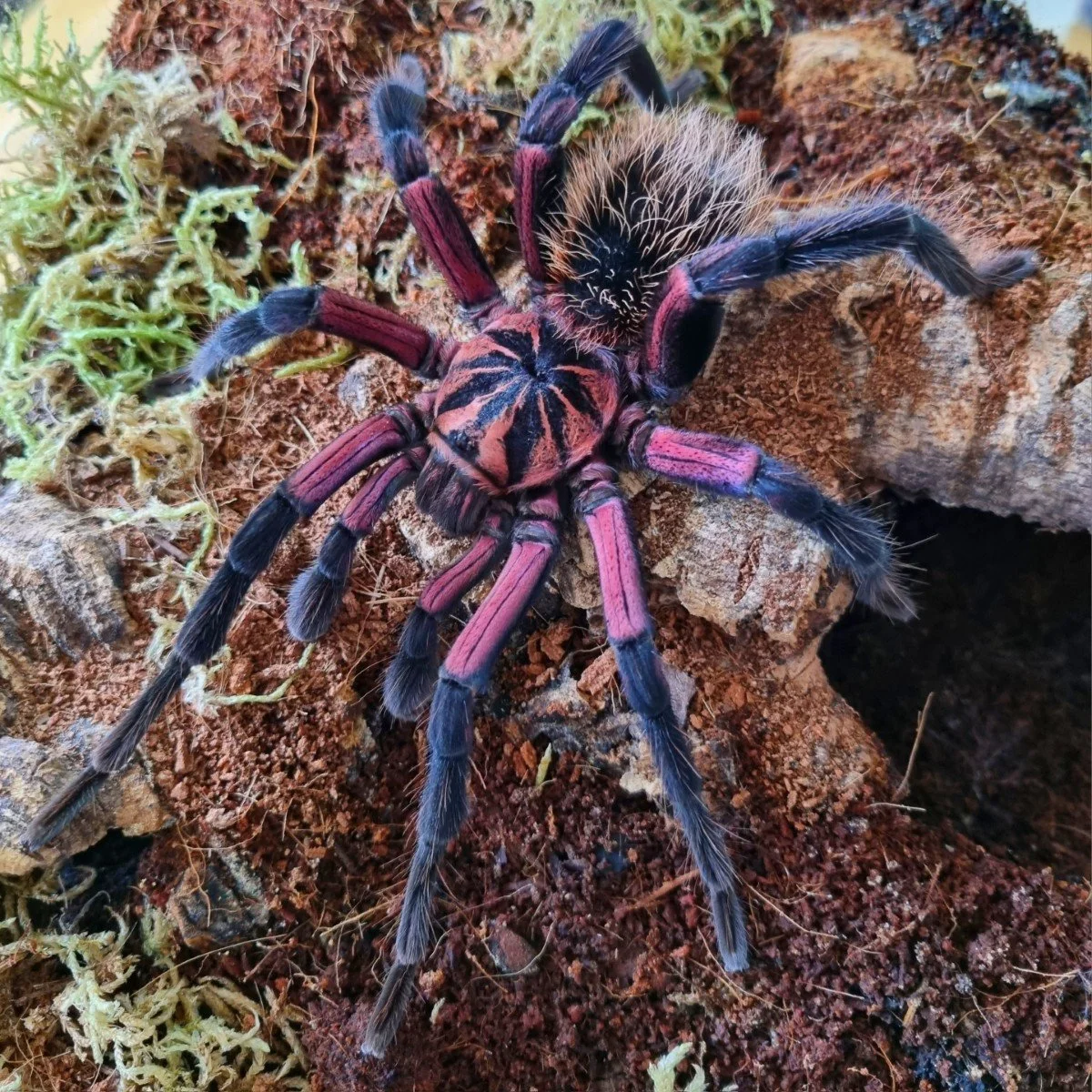
Xenesthis Immanis - Mature Male
Xenesthis Immanis
Often regarded as the classic representative of the genus, the Xenesthis Immanis is a study in contrasts.
Adults typically display a deep black base and rich purple iridescence carapace. Under strong lighting, mature females often exhibit a remarkable metallic purple sheen across the carapace and upper legs. Whereby males of this genus tend to be more striking in colour with their bright pink femurs and their carapace is typically a mirrored image of the females.

Xenesthis Intermedia
Xenesthis Intermedia is generally more highlighted than the immanis, with key colour traits including a bright pink starburst carapace that when contrasted against the rich black body and legs paired with the tinted red hairs across the abdomen create a wonderfully striking spider.
When comparing the Intermedia with Immanis, the colours often appear more blended and less contrasting. Many specimens develop a smoky violet wash rather than the vibrant pink and purple combination associated with immanis.
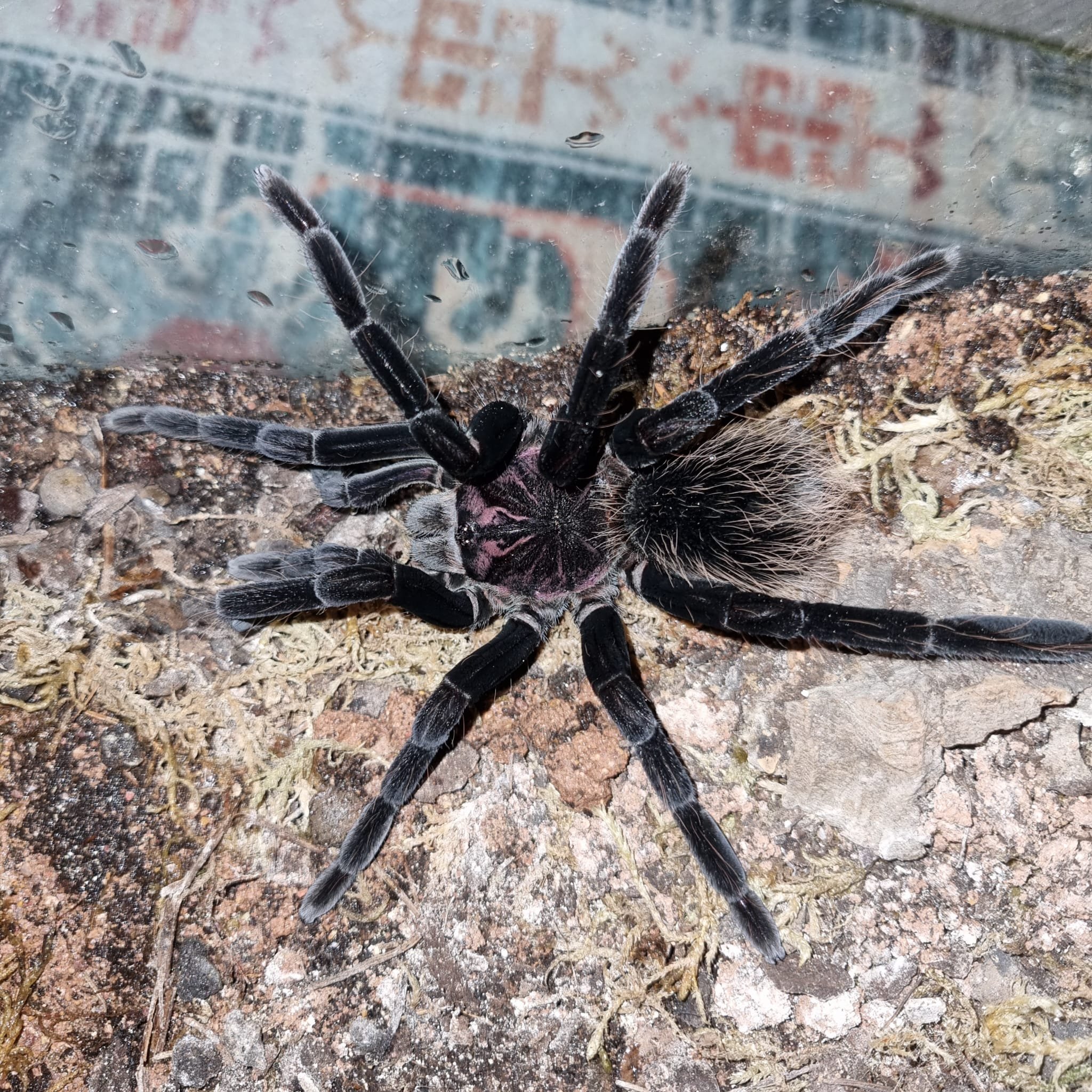
Xenesthis sp. Tenebris
With the name ‘Tenebris’ directly translating to ‘darkness’ this perfectly reflects this species appearance.
Typical characteristics of the sp. Tenebris include an extremely dark black base colouration with minimal bright pink highlights but instead a smoky purple undertone covers the carapace.
Among all known Xenesthis forms, Tenebris is often considered one of the darkest. Rather than displaying bright pinks or purples the Tenebris’ beauty relies on iridescent reflections that emerge only when viewed from specific angles or under certain light.
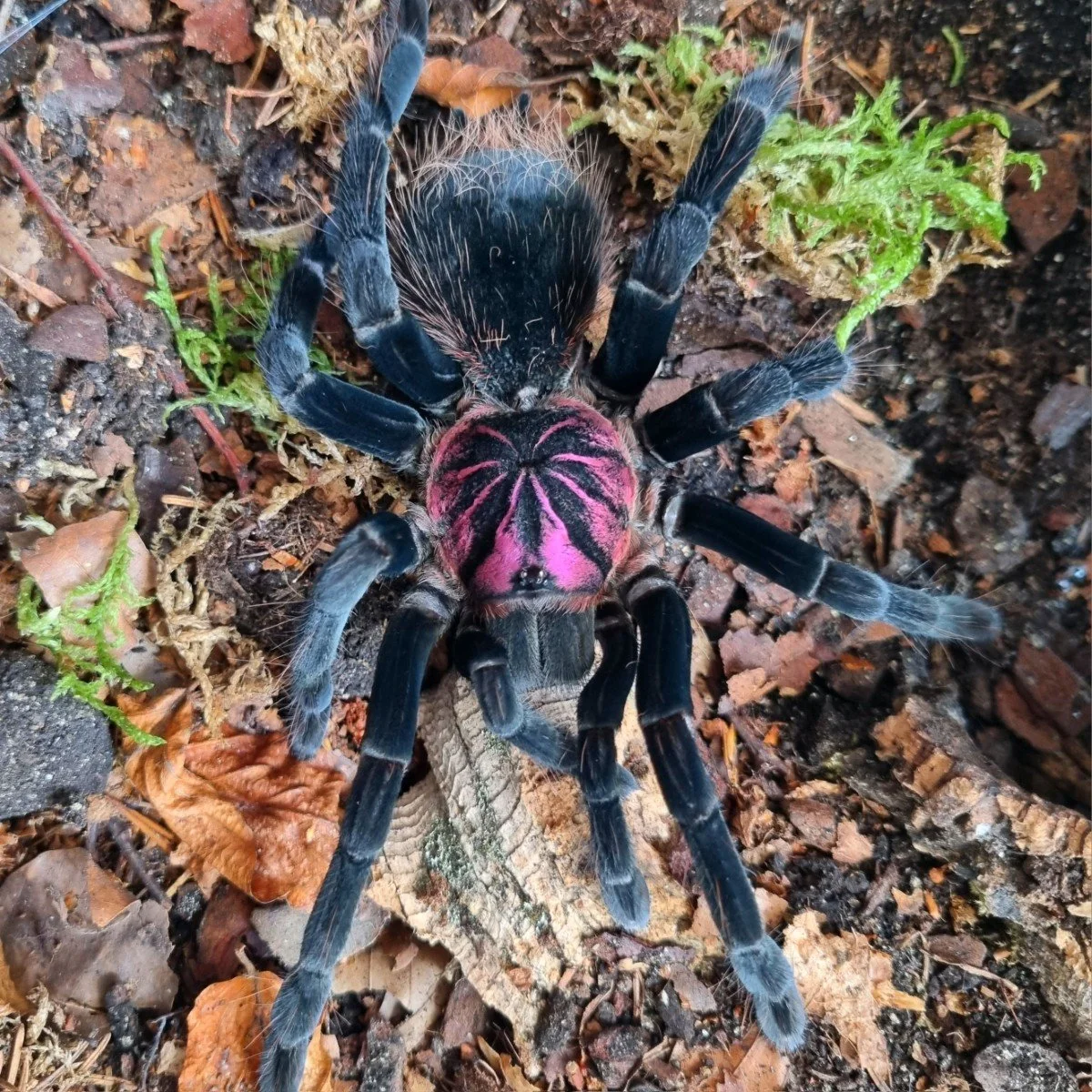
Xenesthis sp. Light - Adult Female
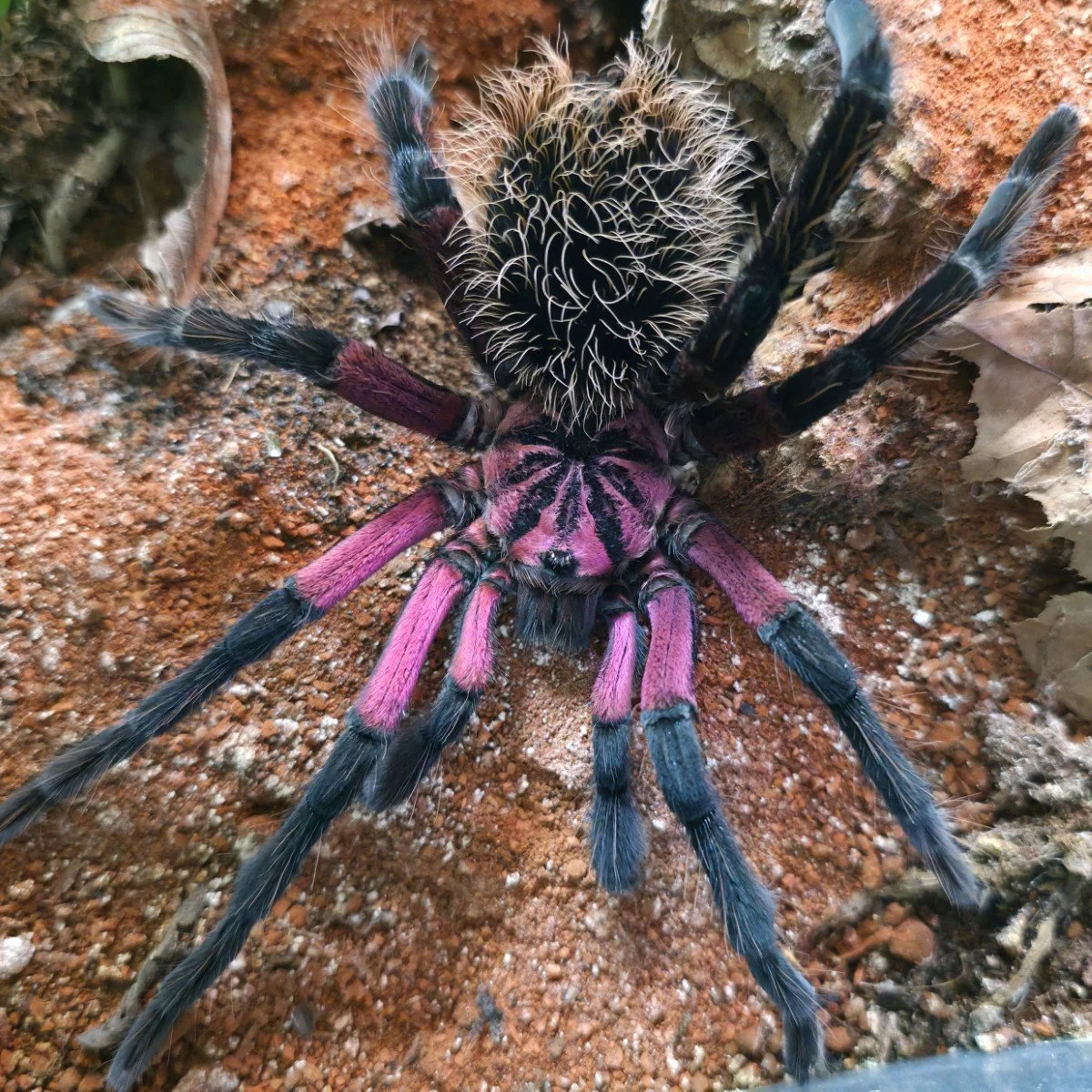
Xenesthis sp. Light - Mature Male
Xenesthis sp. Light
As its name suggests, Xenesthis sp. Light presents a noticeably brighter appearance than many of its relatives in the Xenesthis genus. This spider is highly prized in the hobby for its unique pastel hue, distinguishing features include a reduced black pigmentation with a brighter overall presentation, seen through the striking purple and pink carapace. Males will often appear even lighter in colour with the bright pink colouration being shown in the legs whereas the females will appear darker throughout the legs but still share the same carapace colouration.

Xenesthis sp. Bright
As its name suggests, Xenesthis sp. Bright is one of the most visually impressive forms currently circulating within the hobby. Highly sought after for its extraordinary colouration, this spider displays an intense violety blue iridescence complemented by a highly reflective carapace and striking pink highlights throughout the legs. Freshly moulted specimens are particularly breathtaking, often appearing almost unreal as vivid purples and blues shimmer across the entire body with a metallic sheen. Many keepers consider Xenesthis sp. Bright to be among the most colourful Xenesthis forms currently available, with its exceptional post-moult colours making it a true standout within the genus.
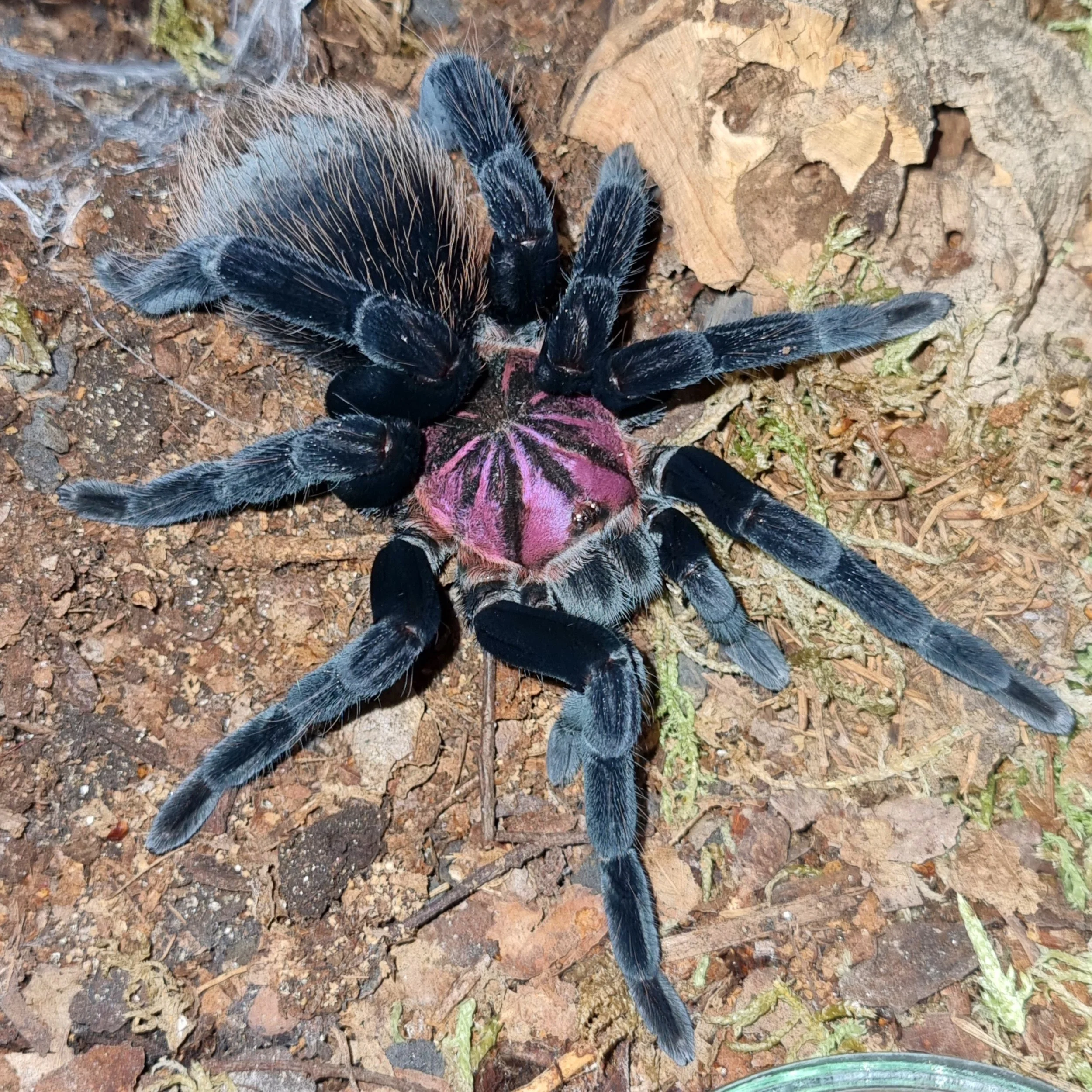
Xenesthis sp. Megascopula
Perhaps the most dramatic and unusual member of the Xenesthis genus, Xenesthis sp. Megascopula is highly regarded for its extraordinary combination of colouration. This impressive species displays a dark charcoal to black base colour enhanced by a strong blue-violet iridescence, with extensive pink and purple highlights and metallic reflections extending across multiple leg segments. Large females are particularly spectacular, exhibiting powerful colour shifts depending on the lighting, with shades ranging from deep royal purple to electric blue and bright magenta. This ever-changing appearance has made Xenesthis sp. Megascopula one of the most desirable and visually striking Xenesthis forms currently available in the hobby.
Our final thoughts…
The genus Xenesthis demonstrates how much colour diversity can exist within a single lineage of tarantulas. From the shadowy elegance of sp. Tenebris to the frosted beauty of sp. White Lowland and the neon-like brilliance of sp. Bright, each species offers its own interpretation of the genus' signature metallic beauty. As additional localities and potentially new species continue to enter the hobby, the colour palette of Xenesthis is likely to become even more diverse. For many enthusiasts, that combination of immense size, impressive growth, and breathtaking colouration is what makes Xenesthis one of the most exciting genera in modern tarantula keeping.
